Thermography & Chronic Stress: Moving from Fight-or-Flight to Rest-and-Digest
When the Body Speaks: Grief, Stress & the Shift Back to Rhythm
I knew what to do.
Eat well.
Prioritize sleep.
Move daily.
Support detox.
Breathe deeply.
These are the foundations of the Five Sacred Rhythms. I teach them. I live them. I believe in them.
And yet — my body was still bracing.
For years, I was caregiving. First through long seasons of family stress, then through the slow unraveling of my sweet Ivy. Anticipatory grief is a quiet kind of stress. It doesn’t always look dramatic from the outside. But inside the body, it is constant vigilance.
Watching. Monitoring. Listening for changes.
Sleeping lightly.
Holding your breath without realizing it.
The nervous system does not categorize stress as “emotional” versus “physical.” It simply responds.
And my body responded by mobilizing.
From the outside, I looked healthy. I was eating nourishing food. Moving. Practicing what I teach. But underneath that discipline, my system was still operating in fight-or-flight. Subtle. Steady. Unrelenting.
When I chose to undergo thermography, it wasn’t because I lacked knowledge. It was because I understood enough to know that something deeper needed to be seen.
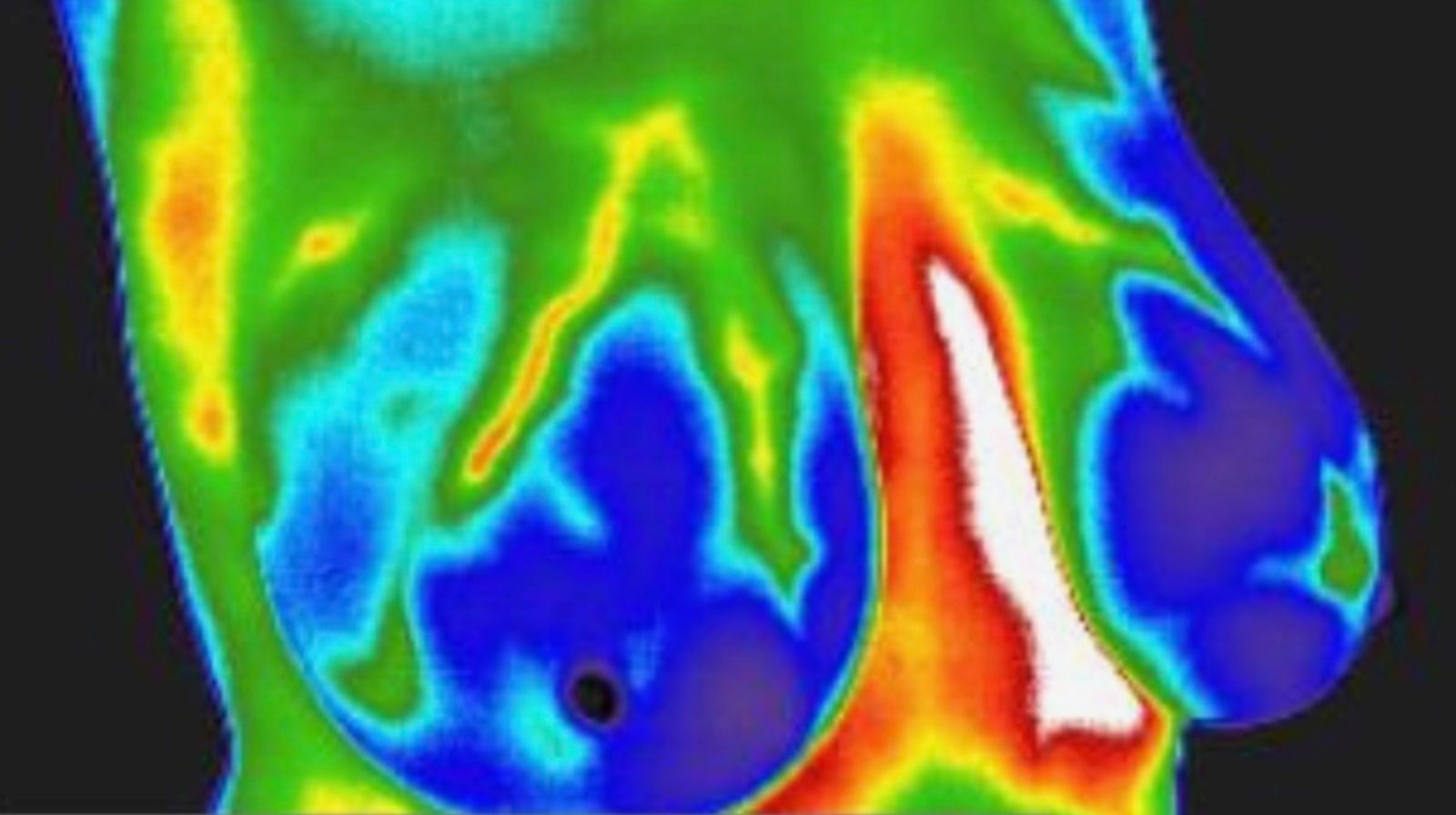
Thermography doesn’t diagnose disease. It reveals physiological patterns — areas of increased heat, vascular congestion, inflammation, asymmetry in circulation. It shows how blood flow is being directed and where the nervous system may be influencing that flow.
Chronic stress changes circulation.
When the body perceives threat — whether that threat is physical danger or prolonged emotional strain — it prioritizes survival. Blood is shunted toward large muscle groups. Digestive activity slows. Peripheral circulation shifts. Cortisol rises. Inflammatory pathways activate. Over time, those patterns can become visible.
The scan reflected exactly what my life had required of me: sustained mobilization.
It showed areas of intensity consistent with a system that had been “on” for too long.
Not broken. Not failing. Protecting.
That distinction matters.
My body had done its job beautifully. It had carried me through caregiving. Through grief. Through long nights. Through holding steady for everyone else. Through the quieter, less visible pressures of responsibility and performance.
The thermography images were not a verdict. They were a mirror — reflecting that even with knowledge, even with intention, the steady accumulation of stress — caregiving, grief, responsibility, productivity, being the steady one — had kept my system mobilized far longer than it was designed to be.
Survival physiology is not restoration physiology.
Fight-or-flight is brilliant for short-term protection.
Rest-and-digest is essential for long-term healing.
And somewhere along the way, I had stayed mobilized even after the crisis periods had passed. Even after Ivy was gone. Even after the house grew quiet.
Grief does not end on the day of loss. Stress does not dissolve just because the crisis softens. The body unwinds slowly. This is where the Sacred Rhythms deepen.
Nutrition alone cannot override a vigilant nervous system.
Movement cannot compensate for chronic bracing.
Detox cannot outpace sustained cortisol.
Sleep cannot fully restore a body that does not feel safe enough to soften.
The rhythms are not a checklist. They are states.
What my body was asking for wasn’t more effort. It was regulation.
Not a dramatic reset.
Not an aggressive overhaul.
A gradual recalibration.
Over the next three months, my focus is not on doing more. It is on teaching my body how to exhale again. On restoring circulation gently. On supporting lymphatic flow without forcing it. On creating internal safety so digestion, hormones, and repair can resume their natural rhythm.
This is the shift.
From vigilance to restoration.
From mobilization to regulation.
From fight-or-flight…
back to rest-and-digest.
And that return to rhythm is where true healing begins.
What the Scan Revealed
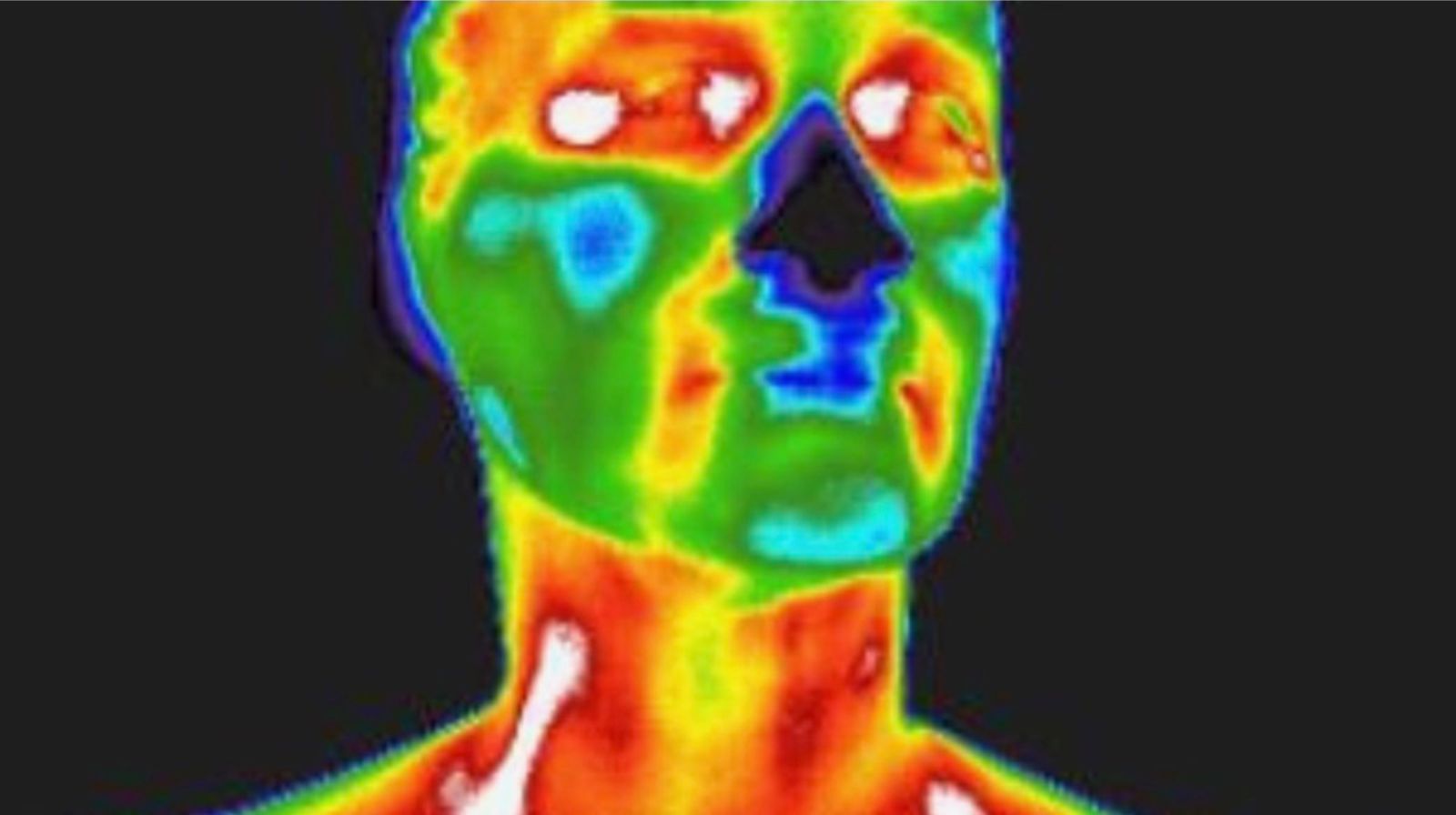
When I received my thermography images, I wasn’t looking for a diagnosis. I was looking for patterns.
Thermography measures surface temperature and vascular activity. Areas of increased heat often correlate with inflammation or heightened circulation. Cooler areas can reflect reduced blood flow or stagnation. The images create a visual map of how the body is distributing energy and resources.
And patterns tell stories.
What stood out immediately was the overall intensity. There were regions showing heightened thermal activity consistent with a system that had been mobilized for an extended period of time. This wasn’t acute injury. It wasn’t localized trauma. It was systemic activation.
There were areas suggesting vascular congestion — the kind that can occur when stress hormones remain elevated and circulation is repeatedly redirected toward survival priorities. When the sympathetic nervous system is dominant for too long, blood flow patterns change. Muscles stay subtly contracted. Digestive circulation may decrease. Inflammatory signaling can increase.
Nothing catastrophic.
But not neutral either.
The images reflected what I already felt intuitively: my body had been compensating.
Compensation is intelligent. It keeps us functioning. It allows us to show up. It lets us carry responsibilities, navigate grief, perform at work, and care for others.
But compensation is not the same as restoration.
What I saw was not a broken system. It was a resilient one operating under prolonged load.
There were thermal patterns consistent with heightened sympathetic tone — the biological signature of fight-or-flight. Circulation was favoring mobilization rather than deep repair. The body was primed to respond, not to rest.
And that distinction is subtle but profound.
Because when we live in prolonged vigilance, even healthy habits can operate inside a stressed physiology. You can nourish well and still be inflamed. You can sleep and not fully restore. You can move your body and still remain braced.
The scan simply made visible what had been invisible: my nervous system had not fully downshifted.
It had adapted beautifully.
But it had not softened.
And that is where the real work begins.
Why Stress Appears in Specific Regions
One of the most common questions people ask when they see thermography images is:
Why does stress show up there?
The answer lies in circulation and nervous system signaling.
When the body perceives stress — emotional, physical, relational, professional — it activates the sympathetic nervous system. This is the fight-or-flight response. It is designed for short bursts of survival.
In that state, blood flow is strategically redirected.
Circulation increases to large muscle groups. Heart rate rises. Stress hormones like cortisol and adrenaline mobilize energy. At the same time, digestion slows. Reproductive function may downshift. Peripheral circulation can shift. Inflammatory pathways may increase.
If this response resolves quickly, the body returns to balance.
But when stress becomes layered and prolonged, the pattern can become habitual.
The Abdomen & Digestive Region
The digestive system is highly sensitive to nervous system tone. When sympathetic activation dominates, blood flow to the gut can decrease, motility can slow or become irregular, and the enteric nervous system becomes reactive.
On thermography, this may appear as temperature asymmetry, areas of heightened heat (suggesting inflammation or vascular reactivity), or areas of relative coolness (suggesting reduced circulation).
Chronic bracing also matters here.
Many high-functioning women unconsciously hold tension in the abdominal wall. Subtle contraction over months or years can affect circulation and lymphatic flow. When combined with stress hormone signaling, the digestive region often becomes one of the first places imbalance becomes visible.
Not because it is weak.
Because it is responsive.
The Colon & Lower Abdomen
The colon is deeply influenced by autonomic balance. Stress alters motility patterns and blood flow. Prolonged sympathetic dominance can contribute to congestion, slowed elimination, or inflammatory signaling.
Thermographic “hot spots” in this region are not diagnoses — but they can reflect vascular activity associated with irritation, tension, or sustained inflammatory signaling.
It is not uncommon to see digestive and colon patterns in individuals navigating chronic stress, grief, or prolonged responsibility.
The gut and the nervous system are in constant conversation.
Vascular Branching & Patterning
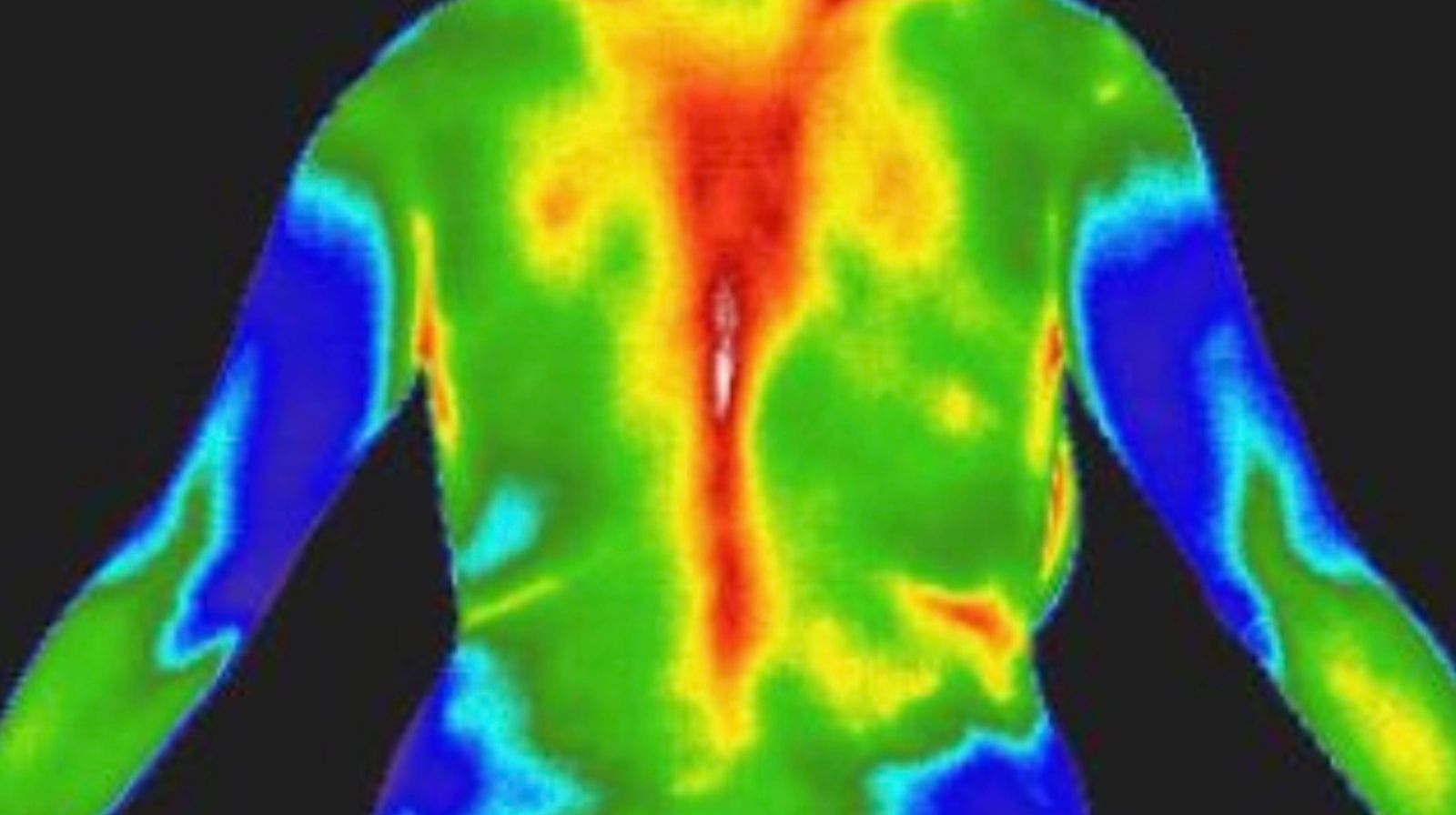
Thermography also highlights vascular branching — the way blood vessels distribute heat across tissues. Under balanced conditions, patterns are relatively symmetrical.
Chronic stress can influence vascular tone. Blood vessels constrict and dilate in response to nervous system input. Over time, asymmetry can develop if one side of the body carries more tension or if circulation is repeatedly redirected.
This doesn’t mean pathology.
It means physiology under load.
The images often show where the body has been prioritizing resources.
Why It Matters
The body does not randomly choose regions to display stress patterns. It reflects where load has accumulated and where regulation has been incomplete.
For me, the abdominal and vascular patterns were consistent with prolonged mobilization — a system that had been on alert for longer than it was meant to be.
Not acute trauma.
Not sudden injury.
Cumulative activation.
And this is where the integrative lens becomes essential. You cannot address vascular congestion without addressing nervous system tone. You cannot optimize digestion while remaining in vigilance. You cannot force detox pathways open while the body still perceives threat.
The physiology follows the state. Which is why this journey is not about targeting regions. It is about shifting the state from which those regions are operating.
From mobilization…to regulation.
From sympathetic dominance…to parasympathetic restoration.
And when that shift begins, circulation normalizes. Inflammation softens. Motility improves. Lymphatic flow increases.
Not because we attacked the symptom.
But because we changed the terrain.
The 3-Month Recalibration: Returning to Regulation
Once I saw the patterns, my first temptation was to do more.
Add supplements.
Layer protocols.
Research aggressively.
But that impulse — that urgency — is often the same sympathetic energy we are trying to unwind.
So instead of escalating, I simplified.
This next season is not about optimization. It is about regulation.
For three months, my focus is on one primary shift: teaching my nervous system that it is safe to downshift.
That means working through the Sacred Rhythms not as a checklist — but as a state-based practice.
Sleep: Protecting the Downshift
Not just hours in bed — but true parasympathetic entry.
Earlier wind-down. Reduced stimulation at night. Consistency. Warmth. Darkness. Ritual.
The goal is not perfection.
It is signaling safety.
Nutrition: Supporting Digestion, Not Stress
Gentle, blood-sugar-stable meals.
Warm, mineral-rich foods.
Eating in a calm environment.
Chewing slowly.
Food only becomes nourishment when the body is in a state that can receive it.
Movement: From Output to Flow
Less intensity. More circulation.
Walking. Lymphatic support. Stretching. Breath-led movement.
Movement that tells the body, “We are not running from anything.”
Detox: Without Forcing
Supporting elimination through hydration, minerals, fiber, and light lymphatic stimulation — not aggressive cleansing.
The body detoxifies best when it feels safe enough to release.
Spiritual Connection: Reorienting Toward Safety
Breathwork. Prayer. Stillness. Nature.
Grief acknowledged instead of suppressed.
Emotion allowed instead of braced against.
The nervous system recalibrates when it experiences safety repeatedly.
Not once. Repeatedly.
Over weeks, the body begins to shift. Circulation normalizes. Digestive tone improves. Hormonal signaling steadies. Inflammation softens.
Not because we forced change.
Because we removed threat.
This is the work I am committing to over the next three months — not dramatic, not extreme — but steady and intentional.
Not survival.
Restoration.
Local Spotlight: Coastal Thermography - Illuminating Wellness with Care

As I reflect on my experience, I want to shine a light on a space where insight meets warmth: Coastal Thermography in Lake Forest. What truly sets them apart is Bonnie. As a breast cancer survivor, her empathy and insight shine. Bonnie's care transforms what might feel intimidating into a space of genuine support. Her professionalism makes you feel truly cared for, like family. Coastal Thermography offers non-invasive imaging, helping you understand your health patterns. You leave not only with valuable insight but with a deep sense of being seen and supported. Supporting spaces like this keeps our wellness rooted in community and care.
Closing: When the Body Is Ready to Heal
Thermography gave me a visual language for what my body had been holding. It confirmed what I felt but had not fully named: even with knowledge, even with discipline, prolonged vigilance leaves an imprint.
But the imprint is not permanent.
The body is adaptive in both directions. Just as it mobilizes to protect us, it can recalibrate when given safety, consistency, and time. This journey is not about chasing perfect images.
It is about listening when the body speaks. It is about honoring grief without becoming defined by it. Honoring responsibility without bracing against it. Honoring strength without confusing it for constant tension.
Ivy’s life — and her passing — reminded me how deeply the body feels what the heart carries. Caregiving is love. Grief is love. But even love can be physiologically demanding.
So this season is not about pushing harder. It is about softening deliberately. About returning to rhythm.
From fight-or-flight…to rest-and-digest.
From vigilance…to vitality.
And that return is not a luxury. It is biology.
